
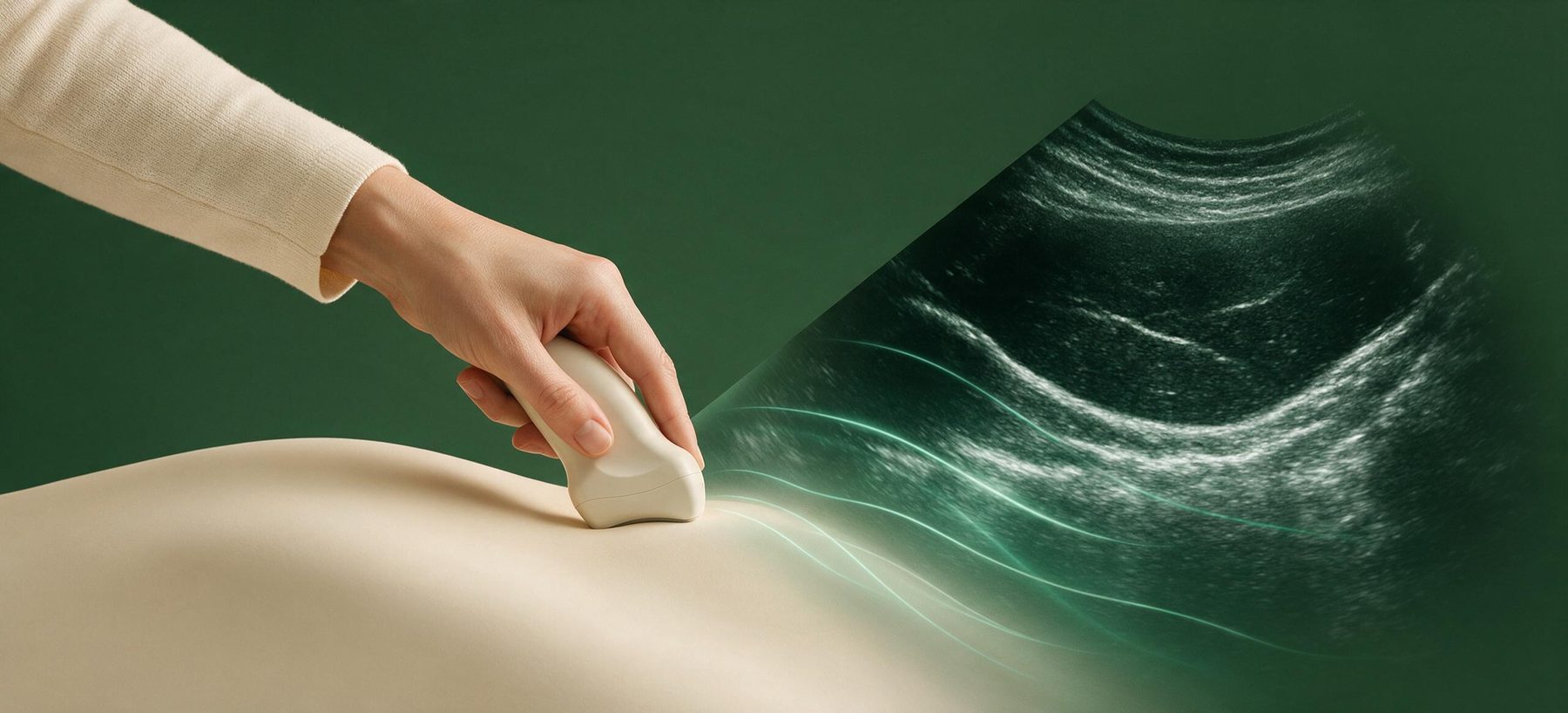
Ultrasound imaging is used everywhere in medicine, from GP surgeries to hospital specialists in obstetrics, oncology and orthopaedics. Part of why it is so widely relied on is speed. An ultrasound can usually be arranged and performed far faster than a CT or MRI scan, and it carries no radiation.
Here are the five reasons it comes up most often.
- Welcome and history5 min
- The scan itself15 min
- Findings explained5 min
View as table
| Part of the visit | Typical time |
|---|---|
| Welcome and history | about 5 minutes |
| The scan itself | about 15 minutes |
| Findings explained | about 5 minutes |
01Why ultrasound is different
Unlike CT or MRI, ultrasound uses sound waves rather than radiation or a magnetic field, which is part of why it is often the first scan reached for. It is quick, widely available, and safe to repeat as often as needed.
Whichever part of the body brings you in, the same principle applies, a picture, explained to you, on the same visit.
The Harley Street Ultrasound team
021. Monitoring your baby
Pregnancy scans are probably the most familiar use of ultrasound. They can be used to measure the size of the foetus and estimate the due date, check its position, assess the placenta, confirm the number of babies, check the sex where the genital area is visible, and monitor growth and development over the course of the pregnancy.
032. Breast lumps
Felt a lump in your breast? Ultrasound is used at the earliest stage to identify what and where it is, and can also be used to take a sample of the lump for further testing, giving you an answer quickly rather than after a long wait.
043. Testicular lumps
Felt a lump in your testicle? Ultrasound is the gold-standard first test for working out what it is, so any potential cancer can be picked up early. Specialist consultants perform this scan with same-day results, so you spend less time worrying and get clear advice on next steps sooner.
054. Muscle and joint pain
Ongoing aches and pains, or a limit on what you can do that was not there before, can often be explained by ultrasound. It can look into joints and identify a muscle tear or weakness in a tendon that is contributing to your symptoms, whether the issue is a chronic ache or a recent injury.
065. Abdominal pain
Ultrasound is a quick, straightforward way to investigate abdominal pain, and it is often the first test a GP requests to look for issues such as gallstones or other suspicious findings. If you have unusual, persistent pain that has lasted more than three days, it is worth having it evaluated. A specialist consultant can give you the reassurance, or the answer, you need.
07What happens next
Whichever of these applies to you, the process is the same. No GP referral required, a scan performed by a consultant, and findings explained to you before you leave.